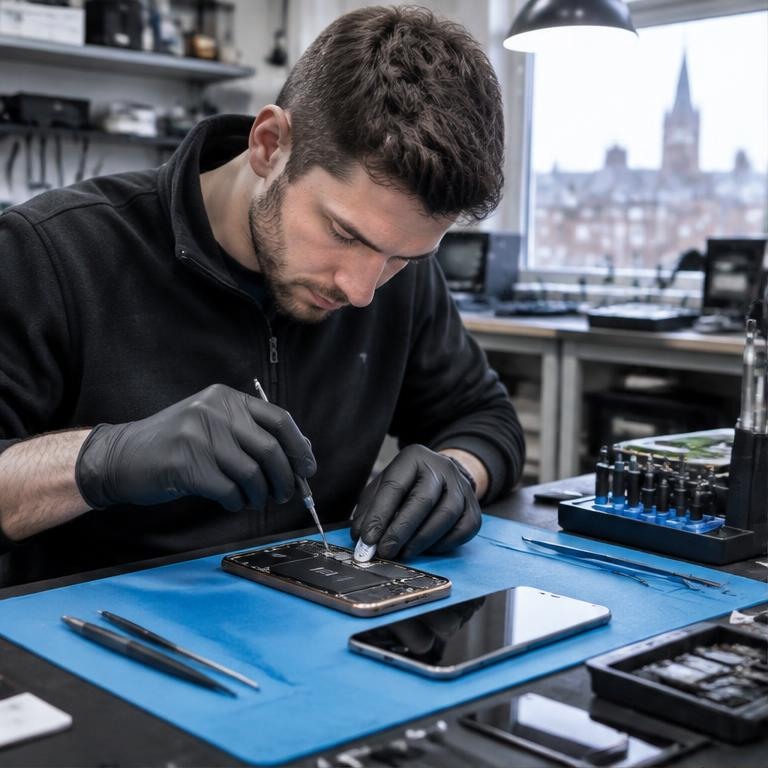
There is a moment most people know well. A phone screen cracks. A laptop slows to a crawl. A washing machine starts making a noise it shouldn't. The instinct, increasingly, is to replace rather than repair — because finding someone to fix it is difficult, spare parts are hard to source, and the manufacturer has made it quietly impossible to service the device yourself.
That is about to change. The EU's Right to Repair Directive is coming into force this summer, and Ireland is in the process of transposing it into national law. Combined with a national repair voucher scheme, a growing network of repair hubs, and a new online registry of repairers, this is the most comprehensive consumer repair framework Ireland has ever had.
What the Right to Repair Directive Actually Does
The Right to Repair Directive, taking effect from 31 July 2026, requires manufacturers of covered products — including washing machines, fridges, smartphones, tablets, and TVs — to offer repairs at a reasonable price, even outside the warranty period. Manufacturers must make spare parts available and cannot use hardware, software, or contractual methods to prevent repair. (Climatejargonbuster)
That last point is significant. Some manufacturers have used software locks, proprietary screws, and warranty-voiding clauses to effectively prevent independent repair. Under the new rules, those practices become legally indefensible in the EU market. The shift gives independent repairers access to the parts and technical information they need to do their work — and it gives consumers a genuine choice between repair and replacement rather than a manufactured default toward the latter.
The Directive is due to be transposed into Irish law by July 2026. (CMS) Ireland's Circular Economy Strategy commits to full alignment, alongside the operation of a national repair platform by mid-2027 that will connect consumers with registered repair operators across the country.
The Repair Infrastructure Being Built
The legislative change is being backed by on-the-ground infrastructure. Ireland's repairmystuff.ie — the national online repair directory managed by Monaghan County Council on behalf of the EPA — already lists over 1,300 registered repair businesses across the country. (Climatejargonbuster) That directory is set to be expanded and formalised under the new strategy, with a centralised registry for repair operators, refurbishers, and remanufacturers being developed to improve visibility and consumer access.
A pilot National Repair Voucher Scheme is also being introduced to empower people and communities to make sustainable, cost-effective choices (Government of Ireland) — a direct financial incentive to choose repair over disposal. The voucher scheme, modelled on similar programmes in Austria and Belgium, is designed to close the price gap between repair and replacement that currently nudges consumers toward buying new.
Local authorities will play a role too. Support for local authorities in developing reuse, repair, and recycling hubs nationwide (Government of Ireland) is a specific commitment in the strategy, building on the Rediscovery Centre model in Dublin and extending the concept to additional regions. These hubs are designed to function as community-based circular economy facilities — places where items can be brought for repair, assessment, or remanufacturing rather than disposal.
Electronics and the Circular Business Model
Beyond consumer-facing repair rights, the strategy also addresses how electronics are procured and used within the public sector. By 2027, the Office of Government Procurement will launch a new ICT equipment management framework to prioritise reuse, and a centralised registry for repair operators, refurbishers, and remanufacturers will be established. (Circuleire)
The public sector is a significant buyer of electronics. Shifting its procurement toward refurbished and remanufactured equipment reduces demand for virgin materials, extends product lifespans, and signals to the wider market that reuse is a credible option at scale. Circular electronic business models — lending, renting, leasing, repair, and servicing — will be actively supported (Circuleire) as part of this framework.
Digital Product Passports: Knowing What You're Buying
Feeding into the right to repair framework is the EU's Digital Product Passport (DPP) programme. The EU will establish a central DPP registry by mid-2026, with phased rollout across product categories through to 2030. Priority sectors for DPPs include batteries from 2027, followed by textiles, furniture, tyres, and mattresses. (Climatejargonbuster)
For electronics specifically, the DPP will carry information on repairability scores, spare parts availability, and end-of-life recycling guidance — data that consumers can access at the point of purchase. It is the transparency layer that makes the right to repair meaningful in practice: you can only make an informed choice about repairability if you know how repairable a product actually is before you buy it.
Why This Matters Beyond the Individual Consumer
The economic case for a repair economy is well established. Repair and remanufacturing create local, skilled employment that cannot be offshored. Every device repaired rather than replaced reduces demand for the raw materials — including critical minerals like cobalt, lithium, and rare earths — that are extracted at significant environmental and social cost in other parts of the world.
Ireland surpassed all EU targets for recycling and recovery of waste electrical and electronic equipment in 2022 (Climatejargonbuster) — one of the few positive data points in the country's otherwise challenging circular economy baseline. The new repair framework is designed to complement that recycling infrastructure with a prevention layer: keeping products in use for longer so that fewer of them reach the recycling stream in the first place.
The Bottom Line
The Right to Repair Directive, coming into Irish law this summer, is a meaningful shift in the relationship between manufacturers, consumers, and the products we use. Backed by a national repair voucher scheme, a growing directory of over 1,300 registered repair businesses, and public sector procurement changes that prioritise reuse, Ireland is building the infrastructure to make repair a genuinely viable first option. The electronics you own are about to have rights. More importantly, so are you.
Sustainability Pulse covers climate, energy, ESG and environmental policy through an Irish lens. Subscribe to the Sustainability Pulse Briefing — every Wednesday.