The Momentum Is Genuine
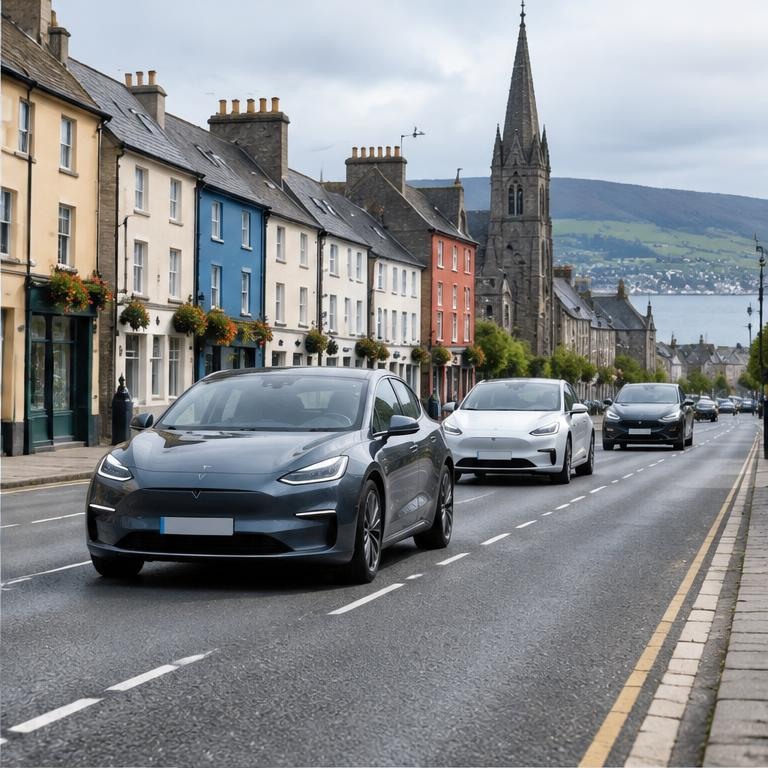
Ireland's electric vehicle story in 2026 is, in several important respects, a success story. New EV registrations rose 35% in 2025 to 23,601 units, a record annual figure, surpassing the previous record set in 2023 and comfortably exceeding Climate Action Plan targets for the year, according to the Society of the Irish Motor Industry. By January 2026, over one in five new cars registered in Ireland was a fully electric vehicle, and private consumers, not fleet buyers or businesses, accounted for 75% of those BEV sales, an 11% increase on the previous year. The message from that single statistic is significant: everyday Irish families are now choosing electric in meaningful, growing numbers, not just early adopters and company car drivers. By May 2026, an estimated 204,000 electric cars were on Irish roads, ahead of the government's own 2025 milestone target of 196,000, and Q1 2026 has continued the momentum, with year-to-date EV registrations up 40.5% on the same period in 2025 by the end of March. April 2026 saw 2,779 new EV registrations, a 110% year-on-year jump according to the Irish Electric Vehicle Association.
When combined with plug-in hybrids and conventional hybrids, battery-technology vehicles now account for nearly two-thirds of all new car sales in Ireland. Traditional petrol and diesel combined now represent just 33% of the market, a reversal that would have seemed unlikely as recently as four years ago. Over 100 EV models from more than 30 manufacturers are available to Irish buyers in 2026, with prices increasingly competitive and ranges improving across nearly every segment of the market.
Why Ireland Got Here: The Policy Foundation
The EV uptake story doesn't happen without a sustained policy and incentive framework that has been built over several years. The SEAI purchase grant, currently €3,500 for new battery electric vehicles under €60,000 bought from approved dealers, has supported tens of thousands of purchases since its introduction. VRT relief of up to €5,000 applies to qualifying EVs, the lowest motor tax band is reserved for electric vehicles, and home charger grants of up to €300 are available through SEAI. Benefit-in-Kind exemptions for company EVs have been extended and adjusted through successive Budgets, maintaining the commercial fleet incentive that has driven fleet operator switching across sectors from delivery logistics to professional services.
The government's 2026 capital investment of €120 million specifically for EV charging infrastructure is the largest single annual charging investment yet made, funding 90 new high-powered recharging pools across the national road network with a focus on transit corridors to Cork, Galway and Donegal. A Draft National EV Charging Infrastructure Strategy 2026-2028, published for public consultation in February 2026 and with a revised final strategy expected from the Minister for Transport later this year, sets out the national pathway for a comprehensive charging network to 2030, including requirements under the EU Alternative Fuels Infrastructure Regulation, smart charging capabilities and universal design principles. The government has committed to ensuring 30% of the national vehicle fleet is electric by 2030.
The 2030 Target: Ambitious, Necessary, and Challenging
Ireland's Climate Action Plan target of between 936,000 and 945,000 electric vehicles on the road by 2030 is the number against which all progress is measured, and it is a stretch target by any honest assessment. With approximately 204,000 EVs on the road in mid-2026, reaching 936,000 by end-2030 requires adding roughly 730,000 more electric vehicles to Irish roads in four and a half years — approximately 160,000 per year, compared to the 23,601 new EV registrations achieved in what was a record year in 2025. Even accounting for the exponential nature of EV market growth as prices fall and model choice expands, the scale of acceleration required is significant, and multiple industry voices have pointed out the gap between the trajectory and the target.
Wood Mackenzie and Pinergy's 2025 analysis found that EV adoption in Ireland was 35% behind the 2030 targets at the time of publication, with the adoption rate needing to accelerate by 54% to meet the plan. The Climate Change Advisory Council, in its June 2026 annual review, also noted EV adoption as an area requiring accelerated progress, alongside heat pumps and public transport.
The Charging Infrastructure Gap: The Number That Matters Most
Of all the challenges on the road to 2030, the charging infrastructure gap is the most structurally important, because it is the constraint that is most likely to limit consumer willingness to switch. The Irish EV Association's 2026 review, published in January, found that Ireland's public fast charging network had grown by 43% in the preceding twelve months, adding 448 new high-power CCS connectors to bring the national total to 1,487 fast chargers across 3,237 publicly accessible charging points. That is genuine progress. It is also, by the IEVA's own mathematical analysis, dramatically insufficient for the 2030 target. At the scale of EV adoption Ireland's Climate Action Plan requires, the public charging network needs to be 5-6 times larger than it is today, requiring between 16,000 and 20,000 additional public chargers installed over the next four years — equivalent to 11-14 new public chargers installed every single day between now and 2030.
Ireland currently has one public charger for every 63 EVs on the road. As new registrations accelerate, that ratio is widening rather than narrowing, creating a real risk that charging availability becomes a brake on uptake rather than an enabler of it. The Irish Times editorial board made exactly this point in January 2026, arguing that charging infrastructure needs to be planned and funded like a national utility, with long-term commitments, dedicated grid upgrades and planning policies that support delivery at speed. The comparison made was to the National Broadband Plan, where sustained State-backed investment eventually transformed rural connectivity — and where the same model of long-term commitment and structured delivery is now needed for EV charging.
The Rural Divide
The infrastructure gap has a specific geographic dimension that matters for Ireland's just transition commitments. EV uptake is significantly lower in rural areas than in urban ones, for reasons that are structurally logical: rural households are more likely to depend on cars for daily movement with no public transport alternative, more likely to be in older housing without easy access to home charging, and more exposed to the range anxiety that comes from living further from fast charging infrastructure. The EU's Alternative Fuels Infrastructure Regulation requires a charging point no more than 60 kilometres apart on key national routes, and Ireland's 2026-2028 strategy specifically targets this with Phase 2 of the national road grant scheme offering grants of up to 70% of site costs, capped at €300,000 per site, for fast charging on single carriageways in lower-density areas.
There are also only an estimated 40 electric heavy-duty vehicles in a fleet of approximately 40,000 across Ireland, according to Energy Ireland analysis from 2025 — a reminder that the electrification challenge for freight and commercial transport is orders of magnitude further behind passenger cars, and will require its own dedicated policy and infrastructure response through the second half of the decade.
The Grid Question
There is a further constraint that connects the EV story directly to the wider energy transition debate. Charging 936,000 electric vehicles by 2030 requires electricity — and that electricity has to come from somewhere at the time of day when people want to charge. EirGrid's February 2026 All-Island Resource Adequacy Assessment warned that electricity demand will exceed supply capacity during peak periods between 2026 and 2028, a constraint that data centre growth is already intensifying. Dynamic electricity tariffs, mandatory from June 2026 under new CRU requirements, are partly designed to shift EV charging away from peak periods and toward overnight hours when renewable generation is more likely to exceed demand. Smart charging, where vehicles charge automatically at the cheapest and greenest times, is built into the 2026-2028 charging strategy as a core feature of the next generation of charging infrastructure, and the Private Wires framework currently in development will allow EV owners to connect directly to renewable sources in ways not previously possible.
The Bottom Line: Ireland's EV transition is genuinely under way — record sales in 2025, continued momentum in 2026, a record charging infrastructure investment, and private consumers now driving the market. The honest picture is one of real progress against a 2030 target that will require sustained acceleration on sales, charging infrastructure and grid capacity simultaneously. The direction of travel is right. The pace still needs to step up.
Sustainability Pulse covers climate, energy, ESG and environmental policy through an Irish lens. Subscribe to the Sustainability Pulse Briefing — every Wednesday.