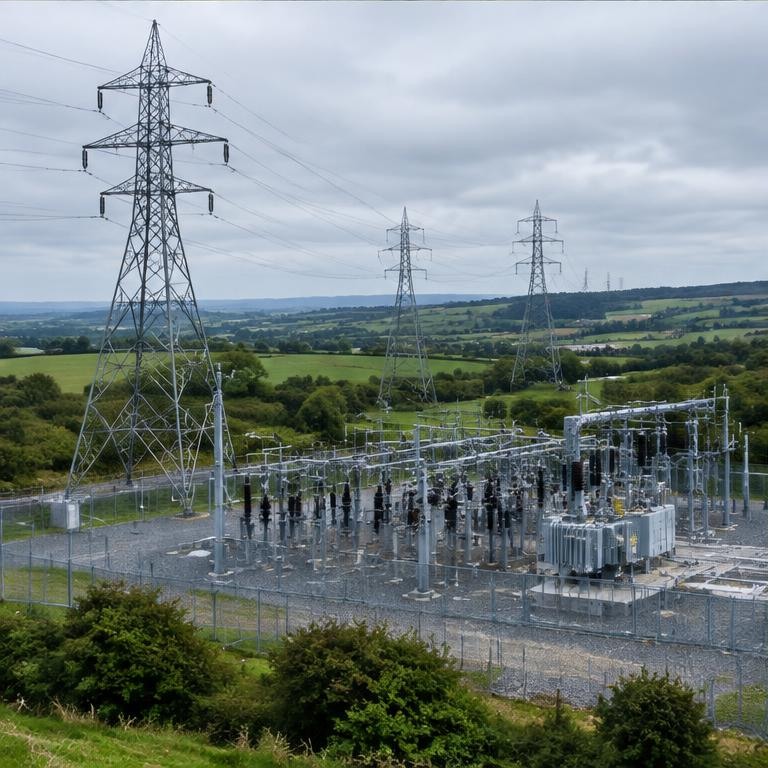
Cork supplies over 25 per cent of Ireland's total national energy demand. The South West region is home to approximately 20 per cent of Ireland's installed electricity generation capacity, centred on the Whitegate oil refinery and the Aghada and Whitegate gas-fired power stations. The region has a population of over 740,000 and contributes more than 20 per cent of national GDP.
These are not aspirational figures. They are the baseline from which a new KPMG Ireland report — KPMG South West 2040 — argues that the South West of Ireland is uniquely positioned to lead the country's transition to a low-carbon economy, and to achieve low-carbon status itself by 2040.
The KPMG South West 2040 Report
Published in May 2026, the KPMG South West 2040 report identifies the region as having what the consultancy describes as "significant advantages" for becoming a national leader in the energy transition — a strong industrial base, leading education and research institutions, deepwater port infrastructure and its existing role as Ireland's most significant energy generation region.
The Port of Cork and the Shannon Estuary are specifically identified as having "significant opportunities to be premier locations to support offshore renewable energy developments." KPMG notes that "accelerated investment of capital and resources should be made in ports and roadway infrastructure" to capitalise on those opportunities — and that such investment will "help Ireland in reducing carbon emissions, enhance energy security, create employment opportunities and over time be more cost effective than fossil fuels."
The report describes the South West as "uniquely positioned for economic growth" and sets out the case for the region to diversify from its current fossil fuel-centred energy infrastructure toward a renewable energy economy anchored by offshore wind, solar and green hydrogen.
The Offshore Wind Opportunity
Ireland's offshore wind potential is among the largest in Europe relative to land mass and population. The Government's target of 5 gigawatts of offshore wind capacity by 2030 — and its longer-term ambitions of 20 gigawatts by 2040 and 37 gigawatts by 2050 — place the South West's deepwater Atlantic coastline at the centre of the national energy strategy.
The Whitegate and Aghada sites — currently dominated by gas-fired generation — have been identified by industry and government alike as strategically located for the onshoring of offshore wind energy. Their existing grid connections, industrial infrastructure and skilled workforce create a transition pathway that green-field sites cannot replicate.
Cork City Council has been actively engaged in supporting this transition. In 2026, a civic reception was held bringing together national and local leaders specifically to align digital innovation with climate and infrastructure delivery — a signal of the convergence between Cork's ambitions as a technology hub and its role as a national energy centre.
What Low-Carbon by 2040 Requires
The KPMG report's projection that the South West could achieve low-carbon status by 2040 is conditional on a set of investments and policy decisions that are not yet confirmed.
Grid infrastructure is the primary enabler. The CRU's Price Review 6 allocation of €18.9 billion for grid investment 2026-2030 provides the funding framework, but the delivery of that investment — and its prioritisation toward the South West's offshore wind landing infrastructure — will determine whether the timeline is achievable.
Planning remains the critical constraint. Offshore wind projects, onshore substations, transmission lines and port upgrades all require planning permission. The accelerated processing of renewable energy planning applications — a specific commitment in the Government's Accelerating Infrastructure Report published on 5 June — is essential to realising the South West's potential on the timeline the KPMG report envisions.
The skills pipeline is a third consideration. Cork's third-level institutions — UCC, MTU and CIT — are actively developing energy transition programmes. MTU's partnership with industry to promote Cork as a national hub for renewable energy generation, encouraging and supporting careers in the local renewable energy sector, is a direct response to the workforce requirements the transition demands.
The Bottom Line
Cork already powers a quarter of Ireland. The KPMG South West 2040 report argues it could power Ireland's entire green transition. The infrastructure is there in outline. The policy framework is forming. The commercial appetite is real.
What the next five years will determine is whether the planning system, grid investment and skills development can move at the pace the ambition requires — or whether Ireland's most strategically positioned energy region once again watches its potential deferred by the constraints that have defined Irish infrastructure delivery for a generation.
Sustainability Pulse covers climate, energy, ESG and environmental policy through an Irish lens. Subscribe to the Sustainability Pulse Briefing — every Wednesday.