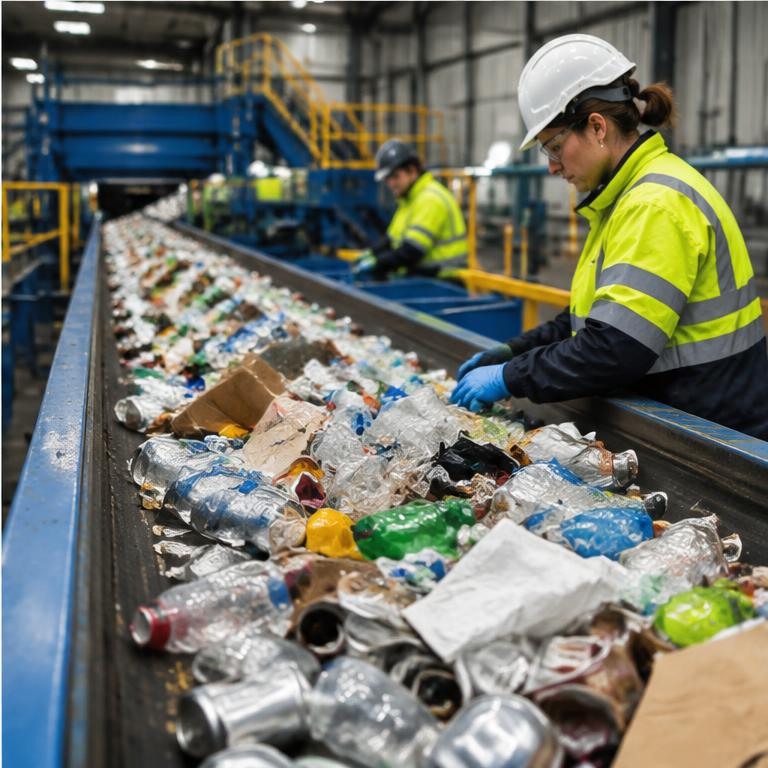
Ireland has taken its most decisive step yet toward reshaping how it produces, consumes, and disposes of goods and materials. The Whole of Government Circular Economy Strategy 2026–2028, published in early 2026, sets out a comprehensive national plan to move the country away from a decades-old linear economy — one built on extraction, production, and disposal — toward a regenerative system where products and materials stay in use for as long as possible. It is an ambition that reaches into every sector of Irish life, from construction sites to clothing rails, from food processing plants to electronics workshops.
The strategy was launched by Minister for Climate, Energy and the Environment Darragh O'Brien and Minister of State with responsibility for the Circular Economy Alan Dillon. It carries statutory weight, is backed by European law, and arrives at a moment when the data on Ireland's resource habits makes for uncomfortable reading.
A Country That Throws Too Much Away
Before any strategy can be assessed, it helps to understand the baseline it is trying to change. Ireland's Circularity Metric currently stands at just 2.7%, meaning that over 97% of the materials flowing through the economy come from virgin sources. That figure places Ireland significantly behind European peers and underscores the scale of the challenge ahead.
The evidence base for the strategy was drawn in part from a circularity gap analysis commissioned by the Department in 2024, which concluded that Ireland continues to operate largely within a linear model characterised by high material and carbon footprints. The same analysis found that advancing the circular economy carries significant potential to support decarbonisation, improve competitiveness, and enhance economic security.
The message from government is not that Ireland is failing — it is that the opportunity ahead is enormous, and the time to act is now.
What the Strategy Is Designed to Do
The strategy positions circularity as central to Ireland's economic competitiveness, environmental sustainability, and social wellbeing, moving the country from a linear "take–make–waste" model to a regenerative, closed-loop system where materials are kept in use for as long as possible.
The headline target is clear and measurable. The strategy aims to raise Ireland's circular material use rate by two percentage points each year, with the aim of reaching 12% by 2030. That would represent a near-fivefold increase on the current baseline — achievable, but only with sustained cross-government action and meaningful industry engagement.
Beyond the headline number, the strategy also aims to strengthen Ireland's position as a destination for circular innovation. One of its core ambitions is to enhance Ireland's standing as a centre for sustainable design, advanced manufacturing, and innovative circular business models, improving competitiveness in both domestic and export markets. For a small, open economy heavily reliant on foreign direct investment and export-led growth, this framing is significant. Circularity is being positioned not merely as an environmental obligation, but as an economic opportunity.
Six Sectors, Concrete Targets
One of the most substantive aspects of the 2026–2028 strategy is its shift from broad ambition to sector-specific commitments. The strategy focuses on six priority sectors for targeted action: construction, bioeconomy (including agriculture), retail, packaging, textiles, and electronics. Each sector comes with its own roadmap, timeline, and measurable actions.
In construction, a Circularity Roadmap for the sector is due for publication this year, alongside the agreement of a sectoral compact partnership between government and the construction industry to accelerate circular practices. This is particularly significant given Ireland's ongoing housing and infrastructure programme, which is consuming enormous volumes of raw materials. From 2028, the strategy also introduces mandatory whole-life carbon assessments for larger building projects, signalling that the sector's environmental responsibilities are being codified rather than left to voluntary best practice.
In agriculture and the bioeconomy, a new National Bioeconomy Strategy and Food Waste Prevention Roadmap are due this year, with a target to cut food waste by 50% by 2030. Ireland's agri-food sector is one of the most export-intensive in Europe, and the push to embed circularity here will require close collaboration between government, Teagasc, and the farming and processing industries.
In retail, the changes will be visible to ordinary consumers. The strategy supports greater provision for repair, reuse, and waste prevention, including the introduction of Bring-Your-Own container options in food service from 2027. Additionally, by early 2028, Hotels, Restaurants, and Cafés must offer their own reusable packaging for takeaway items at no extra charge to the consumer. These measures reflect the EU's wider push to shift the cost of single-use packaging away from the environment and back toward producers.
In packaging, the EU Packaging and Packaging Waste Regulation is to be implemented, with a target of 5% packaging waste reduction by 2030 and 90% plastic bottle collection by 2029. Ireland's Deposit Return Scheme, already operational, is an early building block toward the bottle collection target.
In textiles, a National Policy Statement and Roadmap on Circular Textiles is due for launch this year, with nationwide full and enhanced separate textile collection in place by 2030. The fast fashion industry generates staggering waste volumes globally, and Ireland's new framework will require retailers, designers, and consumers alike to reckon with the true lifecycle of clothing.
In electronics, the strategy commits to the transposition of the Right to Repair Directive and the operation of a national repair platform by mid-2027. It also includes the development of a centralised registry for repair operators, refurbishers, and remanufacturers operating across Ireland — a practical tool that could help consumers find repair options rather than defaulting to replacement.
Cross-Cutting Measures and New Infrastructure
Beyond the sectoral targets, the strategy establishes a range of system-wide actions designed to embed circular thinking across the economy as a whole.
A Circular Economy Advisory Group and a cross-government Oversight Group are to be established to coordinate implementation, while Circular.ie — Ireland's national circular economy awareness and knowledge platform — will serve as the public-facing hub for information, guidance, and behaviour change campaigns.
Funding for circular innovation is also being expanded. The Circular Economy Innovation Grant Scheme is to grow to €1.5 million annually, and Circular Economy Demonstration and Outreach Hubs will be developed across Ireland. These hubs are modelled on the work already being done by organisations such as the Rediscovery Centre, which has pioneered community-based repair and reuse in the Dublin region and is now positioned to support regional expansion.
On the supply chain and industrial side, the strategy includes a feasibility study for a digital platform to enable all-island industrial symbiosis — a model where waste or by-products from one industry become inputs for another, reducing the need for virgin raw materials and cutting disposal costs for businesses.
The EU Context
It is important to understand this strategy in its broader European policy context. Ireland is not acting in isolation. The EU's Ecodesign for Sustainable Products Regulation (ESPR) and the Digital Product Passport (DPP) framework are reshaping how goods must be designed, documented, and sold across the single market. Digital Product Passports will require in-scope products to carry standardised, machine-readable information covering material composition, durability, reparability, recycled content, and end-of-life options — with significant implications for supply-chain transparency and data governance, particularly for manufacturers, importers, retailers, and online marketplaces.
The EU Critical Raw Materials Act adds another dimension. Ireland will introduce a national circularity programme under the Act, focusing on the recovery of critical raw materials and circular product design — a measure with direct relevance to Ireland's pharmaceutical, medical devices, and semiconductor sectors, all of which rely on specialist materials with complex global supply chains.
Why This Matters for Irish Businesses
For the Irish business community, the 2026–2028 strategy is not a distant policy document. It contains real deadlines, statutory obligations, and market-shaping interventions that will affect procurement, product design, waste management, and supply chain planning across multiple sectors in the coming two to three years.
The opportunity framing is compelling. Businesses that move early on circular models — whether through product-as-a-service offerings, repair and refurbishment operations, recycled-content manufacturing, or green procurement — stand to gain competitive advantage both domestically and in export markets increasingly shaped by sustainability requirements. The EU Green Deal has made circularity a prerequisite for accessing public procurement and certain categories of investment funding. Companies that treat this strategy as an external compliance burden rather than an internal opportunity will find themselves at a disadvantage.
As Minister O'Brien noted at the launch, nearly half of global greenhouse gas emissions stem from how goods, food and materials are made and used. Embedding circularity across the economy cuts those emissions at source — long before they reach the atmosphere. The framing is explicit: this is not simply an environmental project, but a cornerstone of Ireland's broader climate action agenda.
That positioning — circularity as climate strategy, not just waste management — is the most important conceptual shift in this document. Ireland has spent years building its climate action infrastructure. The Circular Economy Strategy 2026–2028 is the mechanism by which that infrastructure is connected to the real economy: the factories, farms, shops, construction sites, and households where emissions are actually generated and where the transition must ultimately be won.
The Bottom Line: Ireland's Whole of Government Circular Economy Strategy 2026–2028 is the country's most actionable plan yet for reshaping how resources are used, and it carries the legal and political weight to back it up. With a starting circularity rate of just 2.7% and a target of 12% by 2030, the ambition is significant — but so is the opportunity. For businesses, the coming two years will bring new obligations across construction, retail, textiles, packaging, agriculture, and electronics. The organisations that treat this not as a compliance exercise but as a platform for innovation are the ones best positioned to benefit from Ireland's transition to a cleaner, more resource-efficient economy.
Sustainability Pulse covers climate, energy, ESG and environmental policy through an Irish lens. Subscribe to the Sustainability Pulse Briefing — every Wednesday.