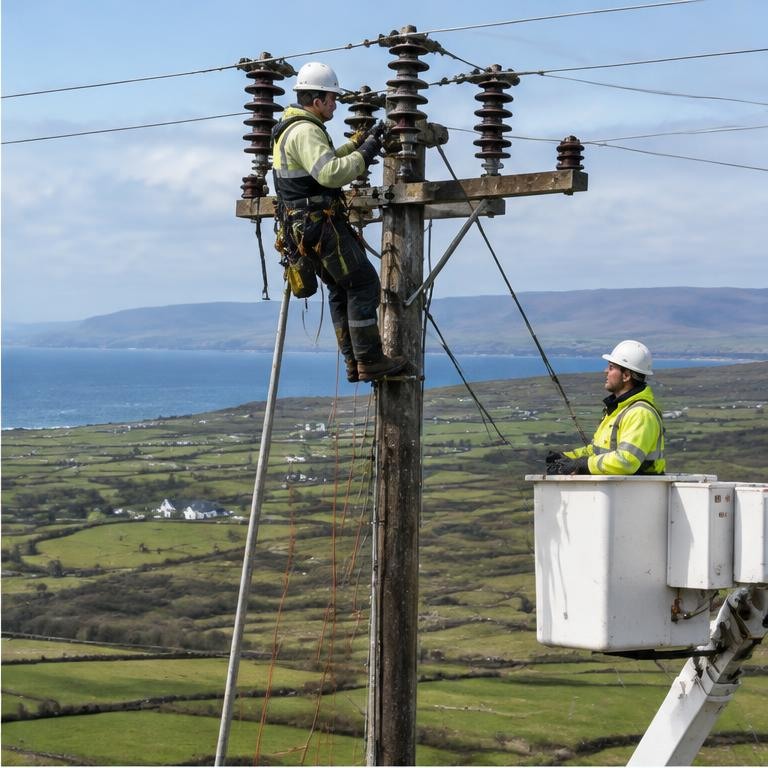
A Double Win in Belfast
More than 300 representatives from organisations across the island gathered at the Europa Hotel in Belfast on 1 October 2026 for the first All-Ireland Festival of Sustainable Impact. When the biggest prize of the night was handed out, it went to the company that keeps the lights on across Northern Ireland.
NIE Networks, which owns and operates the electricity transmission and distribution network in Northern Ireland, was named Overall Sustainability Champion of the Year at the 2026 All-Ireland Sustainability Awards. It also won the Climate Adaptation & Resilience Award earlier in the evening — a double that nobody else matched.
The overall award is a closed category: entrants cannot apply for it. The judges choose it from the finalists across the whole night. In NIE Networks' case, the organisers pointed to "the sheer breadth and diversity" of its projects, with "each entry highlighting the depth of activity across the organisation", and described the company's overall body of work as "truly transformational".
It's a useful reminder that some of the most important sustainability work doesn't happen in shiny consumer brands. It happens on poles, wires and substations most people never think about until a storm comes through.
What NIE Networks Actually Did
The title of an award only tells you so much. What makes this one interesting is the list of work behind it, which NIE Networks set out in its own announcement on 6 October 2026. Four strands stand out.
Climate resilience, driven by data. The company has been using LiDAR — laser scanning from the air — to map the trees and vegetation growing near its lines. Instead of cutting back everything on a fixed timetable, crews can focus on the spans that actually pose a risk. That means fewer outages for customers when storms hit, and less needless clearing, which is better for hedgerows and the wildlife that lives in them.
More capacity from the same wires. NIE Networks has rolled out Dynamic Line Rating, technology that measures real-time conditions such as wind and temperature on overhead lines. On a cool, windy day a line can safely carry more power than its fixed rating suggests. Knowing that lets the network take on more renewable energy and more low-carbon technology — heat pumps, EV chargers, solar — without waiting years for new lines to be built.
A circular economy inside the business. The company has been extending the working life of its equipment through design changes, cutting waste and recovering SF₆, an insulating gas used in switchgear that is an extremely potent greenhouse gas if it escapes. Recovering it rather than losing it is one of the less glamorous but more meaningful climate wins a grid operator can make.
Explaining the grid to the public. Through its Big Network Rebuild campaign, NIE Networks has been setting out why electricity infrastructure matters so much to the energy transition. Upgrades and new lines need public understanding, and the campaign is an attempt to earn it in plain terms.
In Their Own Words
Judy McElroy, Head of Sustainability and Environment at NIE Networks, credited the people behind the work. "These awards reflect the commitment of colleagues right across NIE Networks who are driving meaningful sustainability outcomes through innovation and partnerships," she said.
"We hope our work continues to strengthen the resilience of Northern Ireland's electricity network, enhance biodiversity, and support the communities and customers that we serve every day. We are honoured to be recognised among so many inspiring organisations leading positive change across the island of Ireland."
That combination — resilience, biodiversity and customers in the same sentence — is exactly what made the judges single the company out. It isn't one flagship project. It's sustainability built into how a network is run.
A Festival, Not Just an Awards Night
This year the awards were folded into something bigger for the first time. The All-Ireland Festival of Sustainable Impact combined the annual All-Ireland Sustainability summit with the awards ceremony, under the theme "Smarter Business Through Sustainability". The day included a panel on sustainability-related risks, opportunities and competitive advantage with speakers from Danske Bank, Carbonfit, Business in the Community Northern Ireland and EY.
Northern Ireland's Minister of Agriculture, Environment and Rural Affairs, Andrew Muir, opened the event with a clear message. "Sustainability is not a barrier to business success. It is increasingly one of its foundations," he said. "By working together, we can build a more efficient, resilient and sustainable economy while supporting jobs, protecting our natural environment and strengthening competitiveness for future generations."
The Rest of the Night's Winners
The full list showed how wide the island's sustainability effort now runs — from farms and breweries to hospitals and young changemakers.
Foyle Food Group won Sustainable Agriculture and Food Production, with Ballykilcavan Brewing Company highly commended. Ulster Wildlife took Biodiversity Initiative of the Year, with Heron Manufacture (Promould) highly commended. Ethos Engineering was named Sustainability Consultancy of the Year.
Energy Project of the Year went to Activ8 Energies, in partnership with SSE Airtricity Energy Services, for Monaghan County Council — a fitting cross-border winner for an all-island event. Foodsight won the new Sustainable Product Innovation Award. Spraoi agus Spórt took Social Sustainability, Diversity & Inclusion Initiative of the Year, Ionic Technologies won Sustainable Supply Chain Initiative of the Year, and Fish City won Sustainable Tourism & Hospitality.
Kayleigh-Ann Myles of Lawler Sustainability and STPS was named Young Changemaker of the Year. The Green Legacy Award went to Bob Salisbury of The Field of Dreams, with Laura McMahon of Lawler Sustainability highly commended. Geological Survey of Northern Ireland won Education for Sustainability, GeoEnergy NI at the Department for the Economy took the green marketing and stakeholder engagement prize, Mannok won Net Zero Initiative of the Year, and the South Dublin Surgical Hub, under the governance of St James's Hospital, was recognised for waste and circular economy work — proof that circular thinking now reaches right into healthcare.
Electricity grids, water networks, wildlife corridors and supply chains don't stop at the border. An awards night that puts Monaghan, Belfast and Dublin winners on the same stage makes that point better than any policy paper.
The Bottom Line
NIE Networks earned its double win at the 2026 All-Ireland Sustainability Awards — Overall Sustainability Champion and the Climate Adaptation & Resilience Award — through practical, measurable work: LiDAR-led vegetation management that protects both customers and biodiversity, Dynamic Line Rating that squeezes more renewable capacity out of existing lines, SF₆ recovery and longer-lasting equipment, and a public campaign explaining why the grid matters. Alongside winners from Foyle Food Group to the South Dublin Surgical Hub, it showed that the companies running the island's infrastructure can lead the green transition, not just support it.
Sustainability Pulse covers climate, energy, ESG and environmental policy through an Irish lens. Subscribe to the Sustainability Pulse Briefing — every Wednesday.