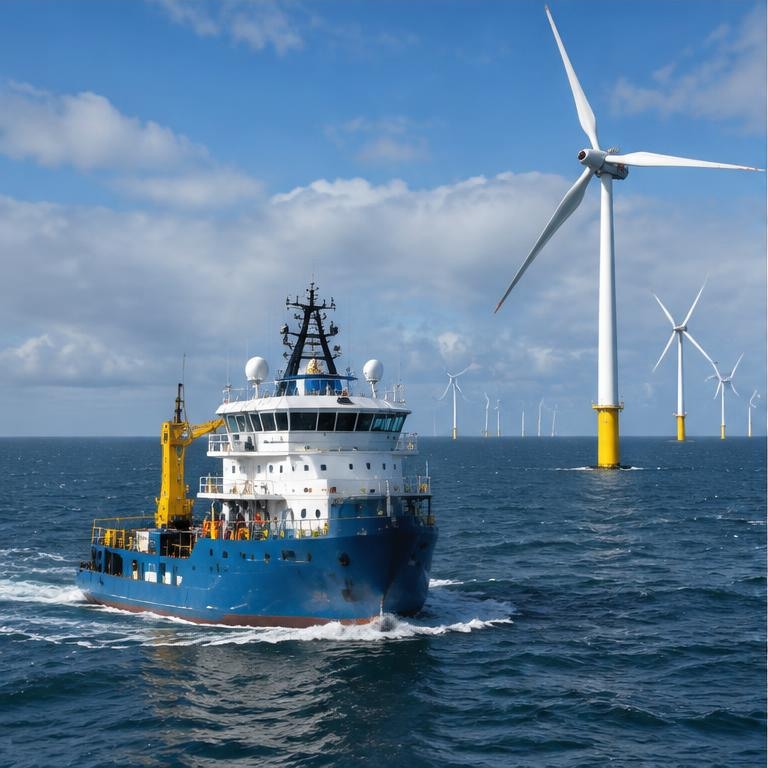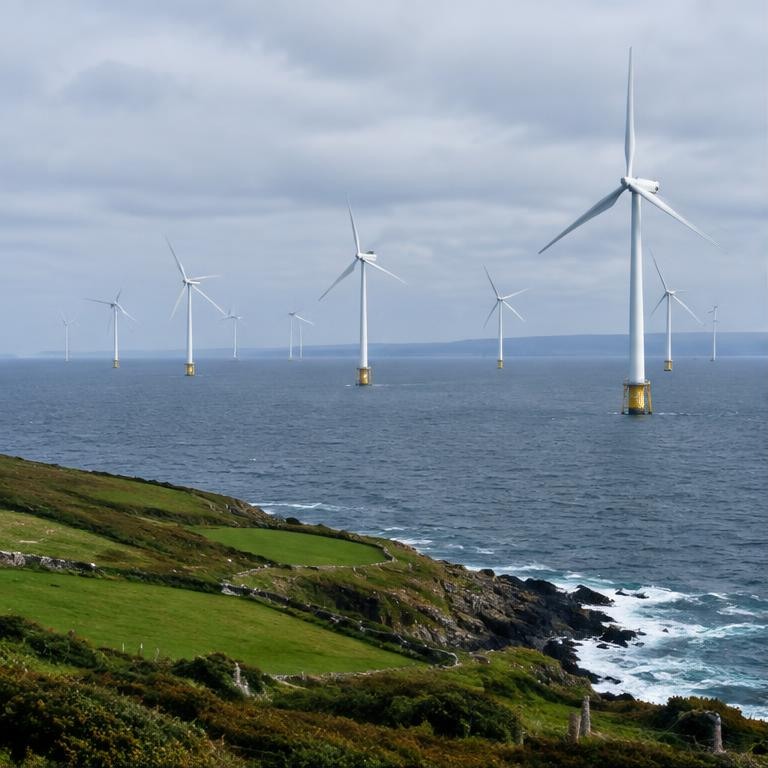
Ireland's offshore wind ambition is no longer a policy aspiration. It is a construction programme — one of the most ambitious energy infrastructure undertakings in the country's history, moving from planning to physical reality across multiple fronts simultaneously.
The scale of what is being attempted is significant. Ireland is targeting 5 gigawatts of offshore wind capacity by 2030 — enough to power the equivalent of millions of Irish homes — as part of its legally binding commitment to generate 80 per cent of electricity from renewable sources by the same date. The long-term vision is more ambitious still: 20 gigawatts by 2040 and 37 gigawatts by 2050, positioning Ireland as a major exporter of green energy to mainland Europe.
The Action Plan and the Urgency Behind It
Wind Energy Ireland launched its Offshore Wind Action Plan 2026 at its annual Offshore Wind Conference at the Clayton Burlington Hotel in Dublin last month, before more than 400 delegates. The plan sets out the urgent steps needed to accelerate delivery — and was launched at a moment of heightened urgency.
The US-Iran conflict and the energy crisis it has triggered have sharpened the strategic case for reducing Ireland's dependence on imported fossil fuels. Minister for Climate, Energy and the Environment Darragh O'Brien, who delivered the keynote address at the conference, was direct: Ireland must accelerate offshore renewable energy development in response to volatile fossil fuel prices and supply disruptions.
The Offshore Wind Energy Programme Annual Report, launched alongside the action plan, outlines progress across nine cross-government workstreams in 2025 and sets out the actions required in 2026.
Where the Projects Stand
Planning applications have been submitted for five Phase One offshore wind projects off Ireland's east coast, with a combined capacity of 3.8 gigawatts. These projects — awarded contracts through the ORESS 1 auction in 2023 — represent the first wave of large-scale offshore wind development in Irish waters.
Among the significant projects in development are the Codling Wind Park — a 1,300 megawatt offshore wind farm located 13 to 22 kilometres off the County Wicklow coast — and the Greystones Offshore Wind Farm, a 1.2 gigawatt project expected to commence construction in 2026 and become operational by 2030.
On the south coast, EirGrid launched its Powering Up Offshore — South Coast Tonn Nua Substation Package at the WindEurope conference in Madrid in April 2026. The procurement, valued at hundreds of millions of euro, covers design, fabrication, installation and commissioning of offshore substations — a key milestone in delivering Ireland's south coast offshore wind targets.
For the longer term, floating offshore wind technology is emerging as critical. Ireland's deep Atlantic waters are unsuitable for fixed-bottom turbines. Research projects concluding in early 2026 have provided critical data on how floating platforms perform in harsh conditions — opening the pathway to the vast offshore wind resource off Ireland's west coast.
The Grid — The Bottleneck That Must Be Solved
The single most important constraint on Ireland's offshore wind ambition is the electricity grid. In 2025, approximately 13 per cent of wind energy was curtailed — effectively wasted — because the grid could not absorb the volume of power being generated. That figure will worsen before it improves unless grid investment keeps pace with generation capacity.
The Commission for Regulation of Utilities' Price Review 6 has allocated up to €18.9 billion for energy infrastructure investment between 2026 and 2030 — the largest grid investment programme in the history of the State. EirGrid and ESB Networks are building the transmission and distribution infrastructure that will carry offshore wind power from landfall points to homes and businesses across Ireland.
The pace of that grid build — and the planning system's capacity to process the necessary applications at speed — will ultimately determine whether Ireland's 2030 offshore wind targets are met on time or deferred.
The Opportunity Beyond the Grid
Ireland's offshore wind programme is not only an energy story. It is an industrial opportunity.
The supply chain required to design, manufacture, install and maintain offshore wind infrastructure at scale represents a significant economic development opportunity for Irish ports, engineering firms and the broader maritime sector. Shannon Foynes, Cork and Dublin ports are all positioning for roles in the offshore wind supply chain. Enterprise Ireland is actively working with Irish companies to develop the capability to compete for contracts in a sector that will require sustained investment for decades.
For a small open economy that imports the majority of its energy needs, the ability to generate surplus renewable electricity and export it to Europe represents a structural shift in Ireland's economic and strategic position.
The Bottom Line
Ireland's offshore wind revolution is underway. The targets are legally binding. The projects are in planning. The grid investment is committed. The supply chain is being built.
What determines whether Ireland meets its 2030 targets — and capitalises on the far larger opportunity beyond them — is execution. Planning decisions, grid connections, port infrastructure and supply chain development all need to happen at a pace that has not historically characterised large infrastructure delivery in Ireland.
The urgency is real. The opportunity is generational.
Sustainability Pulse covers climate, energy, ESG and environmental policy through an Irish lens. Subscribe to the Sustainability Pulse Briefing — every Wednesday.